Aunt Dandelion is an advice blog offered to help readers solve simple or perplexing problems related to social and business etiquette. Ask Aunt Dandelion when you have a problem, and check back soon for answers. Send your conundrums to ask@auntdandelion.com. Or follow Aunt Dandelion on Facebook!
Showing posts with label Manners. Show all posts

What is etiquette, really?

What some people think etiquette is:


  • Stuffy rules that take the fun out everything.
  • Something which only snobs care about.
  • The way people behave in Jane Austen novels (and not since).
  • What little old ladies do over tea and crumpets.
  • Boring, irritating, intrusive, rigid, arbitrary rules.
  • Meaningless prescriptions that cramp personal style.
  • Formal manners that have no relevance in the relaxed modern world.
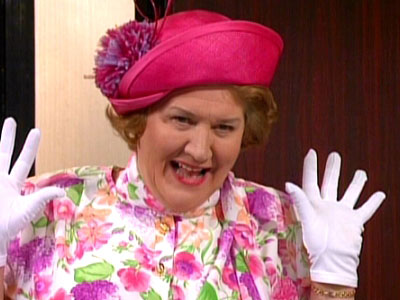
  • Hyacinth versus Onslow.

And the list goes on.

Aunt Dandelion would like to offer a different perspective. Etiquette really is:

  • Common-sense ways of behaving in public that preserve the comfort and dignity of each individual.
  • A framework for throwing parties and other gatherings that run smoothly and on time, and keep guests happy. 
  • An attitude of kindness and charity towards others.
  • Essential information for anyone who aspires to get ahead in business, society and the community at large.
  • A way of attracting friends and potential intimates with decency and charm.
  • The gift of a sense of confidence when encountering people of any social or financial stratum, however high, low, or unfamiliar.  
  • Making peace. 
  • A sure way out of frat-boy slobbishness, cat-girl cliquishness, wall-flower shyness, Mad-Man brusqueness, and all the other defenses behind which insecure people hide.
I could continue, but hopefully my point is made. The knowledge and application of etiquette adds grace notes to life's everyday experiences and elevates one in the esteem of one's peers and betters. Fundamentally, etiquette is simple manners -- "please," "thank you," "may I help?" and "I'm sorry."

Etiquette is the Golden Rule: Do unto others as you would have others do unto you.

Ask Aunt Dandelion 


Are you feeling uncomfortable in a social situation? Fearful of an upcoming business dinner? Worried about how to handle yourself in a particular group? Annoyed by someone's bad behavior? Whatever your problem, the answer is just an email away: click here to Ask Aunt Dandelion.


Is it "sucking up" to say thank you?

"My husband and I were just treated to a weekend away by the owner of my husband's company. He paid for our hotel suites and gave us tickets to the suites at an OU football game. I'm curious about sending a thank you note. I don't want to seem like a suck up but I feel like appreciating is necessary." - A.M.

Aunt Dandelion replies:

The bottom line is, appreciating is ALWAYS necessary! To receive so much generosity from anyone, be it a friend or a boss, and not acknowledge it with a handwritten, mailed thank-you letter, would be the grossest breach of etiquette. Your host spent a lot of money treating you and your husband (suites all the way!). Both business and personal etiquette demand that you put your gratitude into words on (nice) paper.

Aunt Dandelion has never heard of common politeness being referred to as "sucking up" before. Please banish such concepts from your worldview and start writing that thank-you letter!

How to serve yourself condiments

This butter knife must never be used to 
spread butter on your bread. Take a pat
of butter and place it on a clean portion
of your plate, then replace the serving knife 
as you see in this photo.
Aunt Dandelion speaks without being asked:

Dear Readers,

Do you know the correct way to help yourself to butter, mustard, jam, and similar accompaniments that are meant to shared among the people at a table? Aunt Dandelion is frequently aghast at the lack of general knowledge about this simple yet important principle of dining etiquette. 

At table, you have your personal cutlery, which is set around your plate (see photo at the bottom of this post), and then there are serving pieces on the table such as butter knives, sugar spoons, and so on. The serving utensils are for everyone's use, so you must never use them to spread the condiment on your bread, meat, or whatever.

ALWAYS: 
  • Take the portion you need with the serving utensil, and daub or drop it on a clean part of your plate. Butter goes on the bread plate, mustard goes on the dinner plate, etc. NOT on your food.
  • Immediately return the serving utensil to the communal dish and pass it to the diner on your left (always pass to the left). 
  • Use your personal knife, bread knife, or spoon, as appropriate, to spread or otherwise distribute the condiment on your own food. 
  • Break bread before buttering - use your fingers to break dry rolls and bread into bite-sized pieces and butter each piece just before you eat it, replacing your butter knife on the bread plate before taking the bite. 
NEVER: 
  • Use a serving utensil to spread condiments on your own food. (You may use a ladle to pour sauce or gravy directly over your food, but never touch your food with it.)
  • Keep the serving utensil at your own place. This causes a problem for all the other diners. 
  • Stir your coffee or tea with the sugar serving spoon. 
  • Touch any part of a communal dish, food or server with your fingers or with a utensil that has been in your food or your mouth. 
  • Stab the butter knife into the top of the butter. Cut a slice from the end, and replace the knife to the side of the butter. 
  • Place a used utensil of any kind directly on the table or tablecloth. This is unsanitary and creates a mess that the hostess will have to clean up later. 
USUALLY :
  • Try not to replace a serving utensil into the condiment itself. Replace it on the serving dish that should be underneath any condiment served in a bowl or jar. 
  • If your host has not thought of providing a small saucer or plate, you may have to replace the utensil directly in the condiment but this is unfortunate all around. 
Any questions? Ask Aunt Dandelion!

All these utensils at your place are for your personal use.
Daub butter, jam, mustard, etc. onto a clean portion of your plate
using the serving utensil, then spread the condiment on your food
using one of your own personal utensils.


Would It Kill You to Stop Doing That? - Book review

Aunt Dandelion writes:

The publishers of Would It Kill You to Stop Doing That? A Modern Guide to Manners by Henry Alford sent me a copy of the book and requested that I review it. The subject is manners and why they matter, so it seemed appropriate to review in this column.

The first thing you have to understand about Henry Alford is that he has cast himself (no doubt wittingly) as the enfant terrible of etiquette. The book is peppered with mostly humorous turns of phrase, occasional crude language and outlandish metaphors that would make a maiden aunt blush. Aunt Dandelion is made of sterner stuff than that, but still I could not dismiss the overriding impression of a writer who has put on his hipster pants in order to write about etiquette using four-letter words.

There is a certain self-consciousness in the witticisms, a quality of "look how clever I am" now and again. This is a pitfall into which all comedians stumble; just as high-wire acrobats occasionally slip and fall into the net below. As the audience, we may well forgive a little wobble in those who dare to walk a tenuous line. However, we prefer not to see the performer fall during the show. We want him to practice hard enough ahead of time to put on a flawless act. Alford’s book might have been the better for the application of a more judicious editing hand. Some of the chapters seem a little disjointed, as when a stand-up comedian jumps from subject to subject to keep the audience laughing, while other chapters flow admirably and offer useful advice.

Keeping in mind the ironical nature of Alford’s approach, the book can be a fun read and imparts a fresh perspective on manners in our modern society. In chapter one, Alford recounts a visit to Japan, where he wished to learn some of the highly formalized rules of this culture. We discover, through him, some Japanese customs that are charming (such as the entire staff of a department store lining up to bow to the day’s first customers) and some that are more mysterious (such as a supermarket taboo against breaking a bunch of bananas in order to purchase a smaller quantity). In the final chapter Alford brings us full circle as he walks foreign visitors around New York City and exposes them to the customs of that city, so we can experience the oddness of a section of our own society as seen through the eyes of l'étranger. The particular New York customs Alford chooses to highlight are more quirks and not exactly manners in their generally accepted form, so here again we have the hipster at play.

But the point is made, and quite well researched and illustrated throughout the book, that manners tend to be situational, cultural, and peculiar to their time and place. Alford posits useful suggestions for a wide number of personal and social situations, and also delves into the deeper philosophical issues of why we have manners at all. He quotes Emily Post, Dante and Samuel Johnson, and interviews Miss Manners and Tim Gunn in his search for some universal principles of etiquette.

Alford makes wise distinctions among the concepts of manners, mores, etiquette and protocol. He also tries his own hand at giving advice in these matters to acquaintances as well as mentally answering queries posted in newspaper columns, with varying success. I applaud his attempts to dissect tricky social situations – including ones he created himself – and try to find the oil that etiquette can spread on those troubled waters. However, his answers are sometimes marred by slips back into the jejune, which is a reason why this should not be the only book on etiquette that a serious student owns.

Would It Kill You to Stop Doing That? was worth reading and provided some good laughs, especially the story told on page 174 to the top of 176. Aunt Dandelion can definitely empathize with the author's frustration at conversationally inept party guests and agrees with his choice of using humor when deflecting the pompous.

Enter the realm of Henry Alford who dares. You may enjoy it – but remember, there be dragons. You have been warned.

Can You Hear Me Now?

Dear Aunt Dandelion,
Help! I ride in a coworker’s car going to sales appointments, and the driver plays the radio on talk stations all day and loud!!! When I ask him to turn it down he will for a minute, and then it’s back up. I’m stuffing my ears with tissues like I do in loud movies! Plus his radio shows depress me. Isn’t this the pits? – Gwen in Dallas, Texas
Aunt Dandelion replies:

You have my sympathies. If only your coworker knew the rules of etiquette, you wouldn’t be in these pits.

Any time two or more people share a confined space – especially for an extended period of time, and most especially if they are not intimately related – great delicacy is required to maintain personal dignity and group harmony.

The number one rule is the Golden Rule – to be considerate of others. The driver may feel as though the car constitutes his personal space and therefore he can do what he likes. But this is not true when he has a passenger, especially one who is with him all day long. Both passenger and driver are bound by common courtesy to be respectful of each other’s needs and “space.”

Coworkers who share rides should not assume that everyone else wants to hear their entertainment choices on the radio. One should always ask if a particular program or type of music is acceptable before tuning it in. If it is not to the other person’s taste, but not entirely offensive, a compromise is the best solution, where each chooses a radio station or program genre (or blessed silence) in turns.

However, playing the radio too loudly is not a matter for compromise. Incessant loud sounds can cause physical and psychological distress, and you are well within your rights to ask the driver to turn it down to a comfortable decibel level. Tell him that you are very sensitive to sound levels, and say – respectfully – that you prefer it to be softer. Find a specific volume that is comfortable for you – for instance, 10 on the volume dial – and tell him that number.

Once he has complied with your request, you know you have been heard (over the din), and you can do him the courtesy of assuming that he knows, but sometimes forgets. The next time he turns it up to 30, say something like, “Can we please keep it at 10?” and simply reach over and turn it down. Continue to make your request, politely but firmly, as often as you need to. If you feel you need to escalate the request, you can let him know plainly that it hurts your ears at that level.

Keep your requests in “I” language (“I prefer it at 10”) rather than getting into the language of “You” (“You’re playing it too loud again!”), which tends to make people feel defensive.

One day, try bringing a CD of soothing music with you and ask him if you can play it. Select music that is generic – something instrumental – but not too soporific (you don’t want the driver to fall asleep!). This at least will give you an occasional break from talk radio.


Remember, dear readers, sometimes we must inform others of our needs. A caring person will be glad to have the insight sooner rather than later.

A tip of the chapeau

Aunt Dandelion encourages her followers to read this valuable article on the art of conversation by Brett and Kate McKay.

The Art of Conversation: How to Avoid Conversational Narcissism

Quote of the Day

I think a compliment ought always to precede a complaint, where one is possible, because it softens resentment and insures for the complaint a courteous and gentle reception.

~ Mark Twain

When to arrive at a formal dinner

Dear Aunt Dandelion,
What is the correct etiquette for when you should arrive at a dinner party if the invitation says to arrive at 7:30 pm (for example)? -- Lisa in Royal Tunbridge Wells, Kent UK
Aunt Dandelion replies:

Aunt Dandelion recalls the leisurely days when dinner invitations were issued in the form of “8:00 for 8:30” and the guests would arrive at 8:15 on the dot. Such niceties, however, are no longer in fashion in today’s busy world.

The modern hostess is unlikely to have a staff to cook and serve the meal. If guests are not punctual, the timing of the meal will be thrown off, leaving the host or hostess in a quandary. They may even get stuck in the kitchen rescuing a dish when they would rather be enjoying a pre-prandial drink with their guests.

The bottom line is, arrive on time or just a few minutes afterwards. If you will be more than ten minutes late, a phone call to alert the hostess is essential.

As with many points of etiquette, the best practice is the one that makes the evening most efficient and enjoyable for the most people.

Dead fish and houseguests

We have a very warm and close relationship with our college-age children and have always enjoyed hosting their friends in our home, making certain they feel comfortable, well-fed, and welcome.

Over this past year my son has brought his girlfriend home to visit several times for long weekends. Not once has she expressed to us a word of appreciation for the accommodations, interest in us or our home, curiosity about the community, or gratitude for the hospitality. When leaving she offers a simple, non-effusive “thanks” but, with the exception of one brief email, we have never even received a written note.

We love our son. And he may love her. But we are not eager to clean, shop, cook and host this young woman again. If he wants to bring her home for Thanksgiving or Christmas what do you suggest we tell him or do?

-- No More Sleeping in Seattle
Aunt Dandelion replies:

The old saying goes, “Dead fish and houseguests both start to stink in three days.” Aunt Dandelion can well understand why you don’t want this particular dead fish to flop around in your house any more.

You have three possible ways in which to address this problem.

First, speak to your son. Let him know that you do not appreciate his girlfriend’s apathy and rudeness (sins of omission in this case). You can honestly tell him that you would rather she did not stay with you any more unless she can put on her party manners. With luck, he will step up and help her see the light.

Second, if you do permit her to come again, give her household chores, as her frequent visits make her “almost part of the family.” Let your son and the girlfriend know that they will be in charge of making breakfasts or dinners, cleaning the kitchen after meals, tidying the bedrooms and vacuuming. This puts her on notice that she can no longer be a passive lay-about, but is expected to be an active participant in the household. Naturally, you will praise her cooking to the skies and thank her effusively for her efforts. Maybe she will take the hint.

Finally, ask her what excites her. Since she is presumably important to your son, take the time to probe her and try to meet her halfway. She may brighten up when you turn the focus onto her and join in the things she likes.

If these options fail, Aunt Dandelion recommends you ask your son to leave her behind on future trips. Explain that it is too much work for you to undertake for an unappreciative guest.

Who pays for dinner?

I have some friends who live in San Francisco and I always try to get with them when I’m in town on business. Since they cooked dinner at their house last time (beef stew, and I’m a vegetarian, but never mind that) I suggested meeting at my hotel and eating in the hip restaurant there. When the check came, I suggested we split it. Now they’re not talking to me. Maybe I got too loud that night or maybe it was the thing about the bill. What can I do to restore the relationship? — Dain in Austin, Texas
Aunt Dandelion answers:
You certainly have gotten yourself into a stew! A prime cause of social awkwardness is inadequate communication, and that is at the root of your recent problems.
  • Vegetarians and anyone with special dietary needs should make their situation known to the host or hostess as soon as an invitation involving a meal is issued. They may not be able to cater to your needs, in which case you could bring your own fruitarian delights or whatever you can eat, then join the rest of the company at the table without anyone making a big deal out of it. Or assure your hosts that you will be able to eat the bread, salad, vegetables and dessert, and ask them not to go to any extra trouble for you.
  • When you invited these friends to partake with you in the restaurant on your next visit, they were not wrong to assume that you were hosting them in return for their former hospitality. Therefore to suggest splitting the bill at the end of the meal came as a bit of a shock to them. No doubt this is the reason for the current coolness in your relationship. In future, remember that “the one who invites, pays” unless an alternate arrangement is agreed upon before the meal begins.
In terms of restoring the relationship, this is a good time for you to dig deep and send them a lovely gift by mail. Enclose a note that says something like, “Enjoyed seeing you in San Francisco. Next time the meal is on me!” Your friends will surely be looking forward to seeing you again after this proof of your contrition and good will.

Is a thank-you note obligatory after a party?

After attending a party, by invitation only, is it obligatory to send a handwritten note, or will an e-mail suffice? — Luisa in Austin, Texas
Aunt Dandelion answers:

Ah, Luisa, Aunt Dandelion wishes there were more like you in the world! So many people today do not even think that any kind of thanks is required after a party or dinner.

In every social situation there is a scale of formality, ranging from casual encounters to informal occasions to the most formal of events. To be in harmony, the guest’s response should match the occasion where it lies on the scale.

If you are fortunate enough to be invited to attend a formal dinner or celebration, a formal thank-you is required. Everyone who moves, or wishes to move, in this type of society, should have a stock of thank-you notes on hand. These can be plain, monogrammed, or tastefully decorated. A gracious, handwritten note is the required standard to thank the host and hostess of a formal party.

Thank you! Thank you! Thank you!

My mother always told me it wasn’t necessary to send a thank you card for a greeting card you received. However, I think that if a person went through the trouble to pick out a card for you, address it, put postage on it, and mail it, you could send them a note saying you got it, it meant a lot, etc. But, then, do you get into an endless loop of card sending? — Michelle in Flower Mound, Texas
Aunt Dandelion answers:

Michelle, you have a choice here. While Aunt Dandelion does not feel that you must send a card or letter in response to a greeting card, every kind gesture deserves some token of acknowledgement and thanks.

In the case of a greeting card, a response lets the sender know that their card was delivered and received, which is the absolute minimum you owe them. Your response can be made by phone or email, or in person, the next time you see them (if the timing isn’t too distant). Of course you can also write to them, and this is the preferred method for persons who may not use email.

Saying thank you is a beautiful and necessary communication between people. It completes the circle of giving and receiving. This circle is opened by the person who thought enough of you to send or give you something, if only a card or a kind thought. The loop is not endless; thanking them closes the loop, as it is not necessary to thank someone for their thanks.

Tips for correct use of cutlery

Hi Aunt Dandelion!

Earlier you had a survey about which side does the fork belong on. I thought I’d let folks know there’s an easy way to deal with all that silverware at formal dinner parties. Work your way in. Always start with the utensil on the outside. That one across the top, that’s for dessert! — Liz L.
Aunt Dandelion replies:

Thank you, Liz - great advice!

Ladies and gentlemen, the knife, fork and spoon you find at your place at every meal are tools with specific uses, and a modicum of etiquette is involved in the proper implementation thereof. Here are some do’s and don’ts that will save you from getting egg on your face.

DO
  • Know what each utensil is for. In general start using the outermost utensil of your place setting and work your way inward towards the plate with each course. Thus, your shrimp fork or soup spoon is on the far right; your salad or starter fork on the far left; followed by the main course utensils, closer to the plate. Your dessert spoon and fork are generally set above the plate, and butter knife on the bread plate to your left.
  • Place utensils quietly on the plate between bites as needed. When still busy eating, fork and knife should be placed on the plate at “8:20″ (imagine a clock), the fork with tines down.
  • When done eating, signal this to your hostess or waiter by placing knife and fork together in the 5:00 o’clock or 6:00 o’clock position (fork tines up) on your plate.
DO NOT
  • Never place a used utensil anywhere but on your plate. Aunt Dandelion has been deeply shocked to see guests placing knives greasy with food on a clean tablecloth. Who is going to get those stains out? To put any dirty utensil on the table or tablecloth or placemat is unsanitary and thoughtless.
  • Never jab a butter knife into the top of the butter and leave it there, making the butter look like a crime victim. Keep your butter knife on your bread plate. If you were not supplied with a butter knife, use the butter serving knife to place a pat on your bread plate, and replace the knife on the butter dish, to the side of the butter. Then proceed to break your bread into small pieces and, using your dinner knife, butter one piece lightly. Replace your knife on the plate before eating the bread. Repeat this with each bite of bread. (Yes, it’s necessary, and looks very dainty in practice.)
  • Do not save your utensils between courses. A proper restaurant or host will supply clean cutlery for each course. If a restaurant fails to do this, ask them to bring you fresh utensils.

Also see: How to Serve Yourself Condiments

Serviette etiquette: the rules for napkins

My husband and I disagree on what is the appropriate etiquette for where to put your napkin when you are done eating. I was taught to keep your napkin in your lap until you leave the table but my husband says it’s OK to put your napkin on your plate when you are done eating. Who is right? — Michelle in McKinney, TX
Aunt Dandelion answers:

Michelle, this isn’t a case of one is right and one is wrong. Let me explain the napkin rules:

When you sit at the table, open your napkin and place it on your lap. Leave it there throughout the meal, except when using it to clean your lips during the meal (dab, don’t wipe). Incidentally, lips should always be dabbed before drinking from a water or wine glass, to avoid creating a greasy build-up on the glass. This is not only very unattractive; it will interfere with your appreciation of a good wine as well.

If you leave the table at any point during the meal — such as to use the rest room or to assist with serving and clearing when dining in someone’s home – place your napkin on the table, to the left of your place setting. Do not leave it on your chair. And do not fold it into a square or ball it up, just loosely arrange it (with clean sides showing) and drape it attractively next to your place.

When the meal is complete, do as described above — loosely fold the napkin and place on the table. Napkins should never be put on used dinner, dessert or salad plates. From tablecloth it came, to tablecloth it must return. (Or table, or placemat. You get the idea. The napkin is not part of the china.)

Ideally, the napkin should stay in the lap until the diners are rising from table. In practice, however, if everyone has finished eating and a long discussion over the dinner table is ensuing, Aunt Dandelion has no qualms about napkins being restored to the table so that diners may shift positions and get comfortable. At a formal dinner, this is not really advised, however.

Hats off!

Gentlemen, do you wear a hat wherever you go? Aunt Dandelion reminds you that the coolest fashion statement on the street is a faux pas (that’s French for “false step,” or mistake) indoors. In restaurants, homes, theaters, offices, and places of worship, all hats must be removed.

This goes for every type of common head wear* from ball caps to top hats. Especially ball caps — some wearers of these casual caps seem glued to them. But they must be removed as soon as you step through the door. If you are worried about hat hair, just step into the men’s room and use a comb to fluff up your hairstyle.

Where to hang your hat

Use a hat rack or check your hat with the coats, if possible. If you must carry your hat to the table in a restaurant, never, ever place it on the table! This is unsanitary and unsightly. You may place it on an empty seat if one is available. Otherwise, it will have to go on the floor. Place it upside-down in order to keep the inside of your hat clean. Don’t forget to take it with you when you leave.

* Exceptions are made for religious headwear. Consult your place of worship for appropriate guidelines.